Most businesses understand what a warehouse is. Fewer understand the distinction between a private warehouse — space a company owns or leases exclusively for its own use — and a public warehouse, which operates more like a shared logistics resource available to multiple businesses at once. That distinction matters more than it might seem, especially for growing businesses that need professional storage and handling without the overhead of a dedicated facility.
According to the Global Cold Chain Alliance and warehousing industry data, public warehousing has grown steadily as businesses look for flexible infrastructure that scales with demand rather than locking them into fixed commitments. For many operations, a public warehouse isn’t a compromise — it’s the smarter choice.
How a Public Warehouse Works
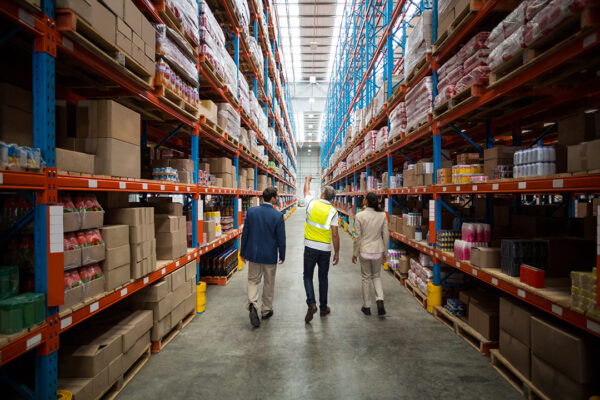
A public warehouse is a third-party facility that offers storage, handling, and often distribution services to multiple clients under one roof. Each client’s inventory is tracked and managed separately, but the physical infrastructure — the building, dock doors, equipment, and labor — is shared across the customer base. You’re paying for the space and services you actually use, not the entire facility.
This model works because most businesses don’t need 100% of their warehousing capacity every day of the year. Seasonal peaks, project-based surges, and irregular inbound shipments mean that a privately leased facility sits underutilized much of the time. A public warehouse absorbs that variability across multiple clients, which keeps costs lower for everyone involved.
What Services Do Public Warehouses Typically Offer?
The service mix varies by facility, but most public warehouses offer some combination of receiving and unloading inbound freight, inventory storage, order picking and packing, outbound shipping coordination, and cross-docking for freight that needs to move quickly without extended storage. Some facilities also offer value-added services like kitting, labeling, repackaging, and pallet rebuilds.
The depth of services matters when you’re evaluating options. A facility that handles only storage is a different proposition from one that manages your entire inbound-to-outbound workflow. Adcom’s Tampa warehouse operates as a full-service facility — handling everything from receiving and staging through cross-docking and final distribution — which means clients aren’t managing multiple vendors to cover the same freight journey.
Where Cross-Docking Fits Alongside Public Warehousing
Storage isn’t always the right call. When freight is already committed to a destination and doesn’t need to sit, Adcom’s Tampa cross-docking services page covers the same-day transfer alternative to the storage model described above.
Who Uses Public Warehousing?
Public warehousing is a good fit across a surprisingly wide range of businesses. Ecommerce companies use it to fulfill orders without building their own fulfillment infrastructure. Importers use it to hold product while customs and delivery logistics are finalized. Manufacturers use it as a regional distribution hub closer to their end customers. Retailers use it to buffer overflow inventory during peak seasons. Construction and hospitality businesses use it to stage FF&E and materials ahead of project delivery dates.
What these use cases have in common is that the storage need is real and ongoing, but not large or predictable enough to justify a dedicated lease. A public warehouse fills that gap without forcing a long-term commitment the business doesn’t need. If you’re still working through whether short-term or long-term storage is the right fit for your operation, our earlier breakdown of short-term vs. long-term warehousing covers that decision in detail.
Public Warehouse vs. 3PL: What’s the Difference?
The terms are often used interchangeably, but they’re not identical. A public warehouse provides space and physical handling services. A third-party logistics provider, or 3PL, typically goes further — managing your inventory, coordinating transportation, handling returns, and integrating with your order management systems. Some facilities function as both, offering warehousing as a foundation and 3PL services layered on top.
For businesses that just need storage and basic handling, a public warehouse is often sufficient. For businesses that want a logistics partner managing a broader slice of their supply chain, a Tampa 3PL relationship makes more sense. The right answer depends on how much of your logistics operation you want to outsource and how much you want to manage in-house.
Why Location Matters in Public Warehousing
A public warehouse is only as useful as its position in your supply chain. A facility that’s well-located relative to your customers, your inbound freight lanes, and the transportation infrastructure you rely on will reduce transit time and cost. One that’s poorly positioned adds miles, time, and complexity to every move.
Tampa’s position along I-4, I-75, and I-275 — combined with direct proximity to Port Tampa Bay and Tampa International Airport — makes it one of the strongest public warehousing locations in the Southeast. Freight moving through a Tampa facility has efficient access to Central Florida, South Florida, the Gulf Coast, and interstate lanes heading north and east. For businesses distributing across the region, that geography translates directly into faster delivery and lower per-shipment cost.
Evaluating a Public Warehouse: What to Ask
Before committing to a public warehouse relationship, ask about minimum storage commitments and how pricing scales with volume. Understand the handling fees structure — some facilities charge separately for every inbound and outbound touch, which can add up quickly. Ask about security, inventory visibility, and what reporting or system integration they offer. And find out how they handle peak periods — a facility that runs out of capacity during Q4 isn’t a reliable long-term partner.
Adcom’s warehousing and distribution team is available to walk through your specific situation and explain exactly how our public warehouse model works, what’s included, and what your costs would look like at your volume. Call 813-887-3747 — all calls are answered by a person within three rings — or request a quote online to get started.
Storage is only part of the fulfillment picture, and how B2B and B2C fulfillment requirements differ is a natural next step once space is sorted out, while the difference between a freight broker and a 3PL explains why a public warehouse offers more than a broker relationship can.