
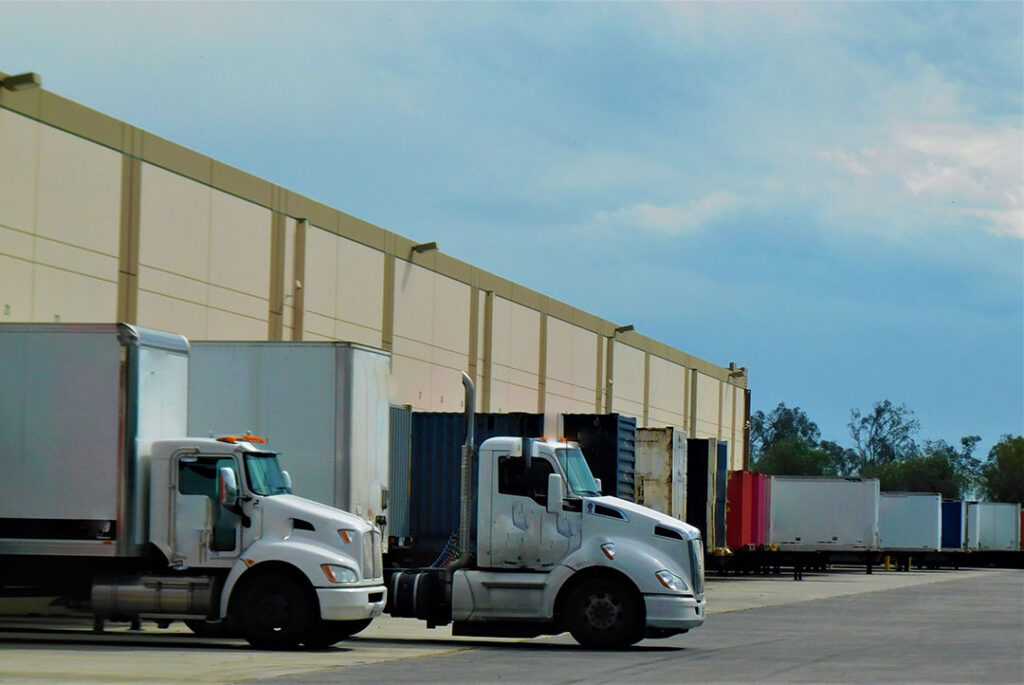
The difference between LTL and FTL freight isn’t simply how much you’re moving. It’s cost structure, transit risk, handling frequency, and delivery timing all at once. Pick the wrong mode and you’re either paying for trailer space you don’t need or watching your freight sit in a consolidation hub while your delivery window closes.
Most shippers learn that lesson on someone else’s dime. A few learn it on their own.
According to the Bureau of Transportation Statistics, trucking moves the majority of U.S. freight by value, and the split between LTL and FTL represents two fundamentally different supply chain strategies — not just two different truck sizes. Understanding which one fits your shipment before you book is one of the most direct ways to control freight costs without giving anything up on service.
What LTL and FTL Shipping Actually Mean
LTL stands for less than truckload. Your freight shares trailer space with other shippers’ cargo. The carrier consolidates multiple shipments heading in the same direction, delivers each along a route, and charges you only for the portion of the trailer your freight occupies. It works well when your load doesn’t fill a truck. It works against you when it almost does.
FTL is full truckload. You book the entire trailer regardless of whether you fill it completely. Your freight moves point-to-point without stops, without co-loading, and without the repeated handling that comes with a shared-space terminal network. Speed and cargo security improve. Cost per unit of space increases unless your freight genuinely fills or nearly fills the truck.
Both modes serve legitimate purposes. Neither is universally superior. The question is always which one fits the shipment in front of you.
The Numbers Tell a Different Story Than Most Shippers Expect
Shippers often compare LTL and FTL on rate alone and get confused when a full truck quote comes in close to what they were paying for a large LTL shipment. That confusion usually comes from not accounting for total cost, including damage exposure, transit time variance, and the downstream cost of a missed delivery window.
Here’s how the two modes compare across the factors that actually drive decisions:
| Factor | LTL | FTL |
|---|---|---|
| Cost basis | Charged by weight, density, and freight class | Flat rate per trailer regardless of fill level |
| Best shipment size | Under 10,000-12,000 lbs or fewer than 6-8 pallets | 10,000+ lbs or shipments approaching full trailer capacity |
| Transit time | Longer due to terminal stops and consolidation routing | Faster with direct point-to-point movement |
| Handling risk | Higher — freight loaded and unloaded multiple times | Lower — minimal touchpoints from origin to destination |
| Damage exposure | Elevated due to co-loading and terminal transfers | Lower — freight moves in a sealed, dedicated trailer |
| Flexibility | Strong for smaller, regular shipments on open schedules | Better when timing and cargo security are non-negotiable |
| Break-even point | Cost-effective below roughly 10,000-12,000 lbs | Often cheaper per pound above 12,000-15,000 lbs |
The break-even threshold shifts by lane, carrier, freight class, and market conditions. But the directional math stays consistent: at some weight and density point, booking a full trailer becomes cheaper than paying LTL rates on a large partial load. Knowing where that line sits on your specific freight lanes is worth the exercise.
LTL Makes Sense in These Situations
LTL works well for businesses that ship frequently but in volumes that don’t justify a full trailer. A manufacturer sending weekly replenishment to a regional distributor. A B2B supplier fulfilling smaller purchase orders across multiple delivery points. A business that needs to move freight on a consistent cycle without absorbing the cost of a full truck on every run.
It also works well when your freight isn’t time-critical. LTL shipments move through terminal networks, which means more handling and longer transit times than a direct FTL run. If you have a few days of flexibility and your shipment is well under 10,000 lbs, LTL typically delivers strong value on cost.
One nuance worth knowing: LTL consolidation through a Tampa cross-dock facility can improve both cost and transit time on regional moves. Instead of entering a national carrier’s terminal network cold, your freight consolidates locally with other shipments moving in the same direction. Fewer terminal touches. Faster delivery. Without the FTL price tag.
When FTL Is the Right Move
Full truckload earns its cost when speed, cargo security, or freight volume justifies the commitment. Time-sensitive shipments with hard delivery windows are the clearest case. So is high-value freight where co-loading with unknown cargo introduces risk your operation can’t absorb.
Volume is the other driver. When a shipment approaches or exceeds 10,000-12,000 lbs, the LTL rate structure starts working against you. Carriers price LTL based on freight class and density, and large shipments in the LTL system frequently cost more per pound than a direct FTL quote on the same lane. At that volume, booking a full trailer is often the better economic decision even if the truck isn’t packed to the walls.
Fragile, oversized, or awkwardly dimensioned freight also tends to favor FTL. Cargo that’s difficult to co-load without damage risk, or that requires special handling at every terminal transfer, moves more predictably in a dedicated trailer with fewer hands on it.
Mode Errors Cost More Than the Rate Difference
Misjudging the right freight mode rarely shows up as a line item on the invoice. It shows up everywhere else.
Ship a large load LTL when FTL was the better call, and you absorb inflated freight class rates, longer transit times, and higher damage exposure. The savings you expected on the upfront rate often disappear in damage claims, late delivery penalties, or the cost of reshipping. Ship a small load FTL and you’re paying for trailer capacity that was never needed. That’s a clean overspend. Repeated across a year of freight, both errors compound fast.
Most operations that audit their freight spend carefully find that mode selection mistakes on habitual lanes account for a disproportionate share of avoidable cost. The fix is usually simple once the pattern is visible.
Cross-Docking Shifts the Calculation on Regional Freight
Cross-docking introduces a third option that changes how LTL and FTL economics interact, particularly on inbound freight headed toward regional distribution.
When freight arrives at a Tampa facility destined for multiple regional delivery points, cross-docking allows inbound loads to be sorted and consolidated for outbound delivery without entering traditional warehouse storage. The result is faster regional movement at a lower per-unit cost than running individual LTL shipments from origin on a national carrier network.
For businesses moving freight into or through the Florida market, cross-docking can function as a bridge between the two modes — using FTL economics on the inbound leg and efficient regional delivery on the outbound side. It performs especially well for import freight arriving at Tampa International Airport or Port Tampa Bay that needs break-bulk distribution across Central and South Florida.
When speed matters more than mode, knowing when air freight beats ground shipping is worth a look, and for freight coming off a ship at Port Tampa Bay, understanding how drayage works covers the part of the move LTL and FTL don’t handle.
Get the Mode Right Before the Freight Moves
Adcom Worldwide has managed LTL and FTL freight out of Tampa for over 40 years, with a facility three minutes from Tampa International Airport and direct access to the I-4, I-75, and I-275 interchange. Whether you’re optimizing a recurring LTL lane, consolidating inbound volume for regional break-bulk, or evaluating a cross-docking arrangement that changes how your freight moves entirely, Adcom has the operational depth to help you make the right call.
- FTL and LTL freight services cover full truckload and less-than-truckload shipping built around your volume and lane requirements.
- Cross-docking services provide inbound-to-outbound transfer with minimal dwell time, ideal for committed freight that needs to move fast.
- LTL consolidation through Tampa improves transit time and reduces per-unit cost on smaller loads moving regionally across Florida and the Southeast.
- Expedited freight is available when your shipment can’t wait on a standard LTL transit window.
If you’re not sure which mode fits your next shipment, request a quote and the Adcom team will work through the right approach before you book.