
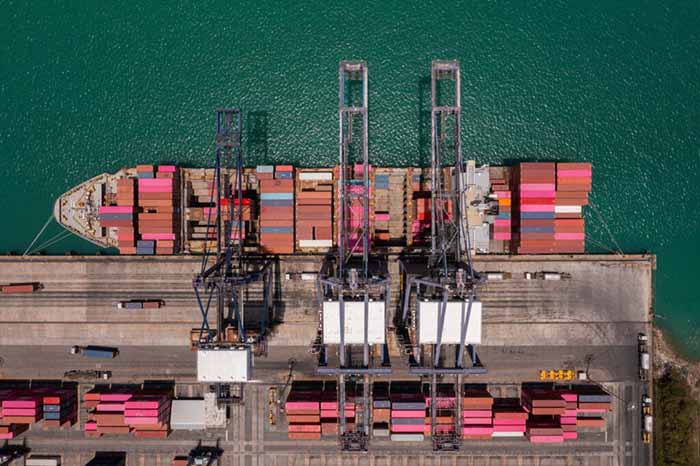
Port Tampa Bay is Florida’s largest port by tonnage and one of the most strategically positioned freight gateways in the Southeast. It handles everything from bulk commodities and petroleum to containerized cargo and project freight — and for businesses moving product into or out of Florida via ocean, it’s often the most efficient entry and exit point on the Gulf Coast. But knowing the port exists and knowing how to actually ship through it are two different things.
According to Port Tampa Bay, the facility handles over 37 million tons of cargo annually and connects directly to I-4, I-75, and the broader Southeast freight network — making it a critical node for businesses distributing across Florida and beyond. Here’s what shippers need to know about moving freight through the port effectively.
Understanding Port Tampa Bay’s Cargo Mix
Not all ports handle all cargo types equally. Port Tampa Bay’s strength is in bulk and break-bulk cargo — fertilizers, phosphate, steel, petroleum, and aggregate — along with containerized cargo through its Hookers Point terminal. For businesses moving containerized imports or exports, the container terminal handles standard 20- and 40-foot containers with connections to major ocean carriers serving Latin American and Caribbean trade lanes.
Project cargo — oversized or heavy freight that doesn’t fit standard container configurations — is also a Port Tampa Bay strength. The port’s infrastructure supports large-scale industrial shipments, equipment moves, and construction materials that require specialized handling and vessel coordination.
The Inland Logistics Connection
Moving freight through a port is only part of the equation. The more complex question is how freight gets from the port to its final destination — or from its origin to the port for export. This inland leg, sometimes called drayage, is where most port logistics problems occur. Containers sitting at the terminal awaiting pickup, drayage trucks that aren’t positioned for a specific cargo type, and coordination gaps between ocean carriers and inland logistics providers are all common friction points.
Having a logistics partner positioned close to the port reduces drayage complexity significantly. Adcom’s Tampa warehouse is located minutes from Tampa International Airport and in close proximity to Port Tampa Bay’s freight corridors, making it a practical staging and transload point for container freight moving off the port. Inbound containers can be received at Adcom’s facility, unloaded, cross-docked or stored, and redistributed to final destinations across Florida and the Southeast without extended dwell time at the port terminal.
Cross-Docking for Port Freight
Container freight often arrives in configurations that don’t match outbound distribution needs. A full container of mixed SKUs destined for multiple Florida customers needs to be deconsolidated and redistributed — which is exactly what Adcom’s cross-docking services in Tampa is designed to do. Rather than moving an entire container to a warehouse, storing it, and then picking and routing individual pieces, cross-docking handles the deconsolidation and outbound dispatch in a single, efficient workflow.
For importers distributing across Florida, this model — port pickup, cross-dock at a Tampa facility, outbound to regional customers — often produces faster delivery times and lower total costs than alternatives that involve more storage or longer inland transit.
Export Freight: Working Backward From the Vessel
Export freight through Port Tampa Bay requires working backward from the vessel’s cutoff date — the deadline for freight to be at the port terminal and cleared for loading. Missing a vessel cutoff means waiting for the next sailing, which can add a week or more to transit time and disrupt delivery commitments to international customers.
Building a buffer — staging freight at a warehouse near the port before the cutoff window rather than shipping directly to the terminal on the last possible day — gives you a controlled handoff point and reduces the risk of a missed vessel. It also creates an opportunity to inspect freight, verify documentation, and address any discrepancies before the irreversible step of loading onto a vessel.
International Freight Forwarding and Port Coordination
For businesses new to international shipping through Port Tampa Bay, working with an experienced freight forwarder is the most direct path to avoiding the compliance and documentation errors that delay clearance. Customs documentation, country-of-origin requirements, hazmat declarations, and booking coordination with ocean carriers all need to be handled correctly before freight arrives at the port.
Adcom’s connections to international freight forwarding in Tampa give clients a single point of coordination for the full journey — from inland logistics and port staging through ocean booking and customs clearance. If you’ve been managing freight accessorial costs on your domestic lanes and want to understand how port logistics affects your total landed cost, our earlier piece on freight accessorial charges covers the domestic cost drivers that often get overlooked alongside port fees.
Where to Find Cross-Dock Services in the Tampa Market
Port-adjacent deconsolidation only works if the receiving facility can turn containers fast. Adcom’s cross-dock services in the Tampa market page details the same facility and transfer process referenced above.
Call 813-887-3747 or request a quote to discuss your port freight needs.
For more on choosing a partner, see what makes a reliable freight company Tampa’s essential logistics partner, and why choosing a local freight company matters for Tampa’s businesses.