
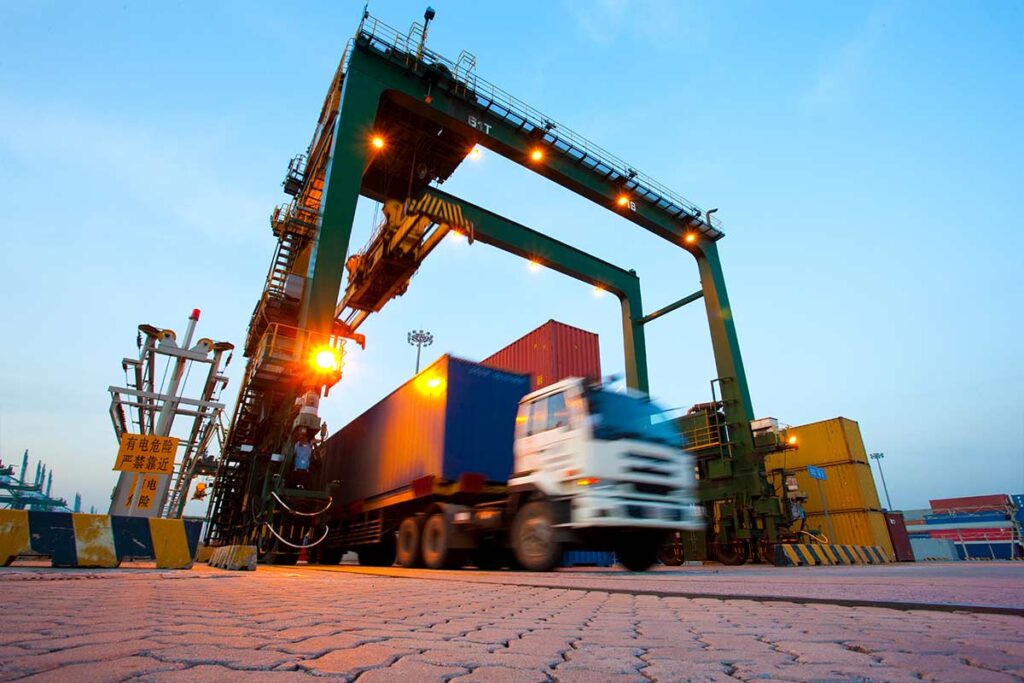
Every container that moves through a port has to travel one more leg before it reaches its destination. That leg is short, sometimes only a few miles, but it’s one of the most operationally consequential moves in the entire supply chain. It has its own pricing structure, its own carrier network, and its own failure modes. Miss it in your logistics planning and the container that made it across an ocean on schedule sits on a terminal chassis longer than it should, accumulating fees while you sort out the ground move.
That short leg is called drayage. And if your freight moves through Port Tampa Bay, understanding how it works isn’t optional.
Drayage Is a Specific Type of Short-Haul Trucking
Drayage refers to the movement of freight over a short distance, typically the segment between a port terminal and a nearby warehouse, rail yard, distribution center, or cross-dock facility. It’s not long-haul trucking. It’s not last-mile delivery. It sits between port operations and the broader ground transportation network, connecting the two in a way that nothing else in the supply chain does.
The trucks that run drayage moves are typically operated by drayage carriers who specialize in port work. They know the terminal operating hours, the chassis pools, the appointment systems, and the gate procedures. That specialization matters because port terminals operate under tight scheduling constraints. A drayage carrier without experience at a specific terminal is slower, more likely to miss appointments, and more likely to create the kind of delay that triggers detention charges.
Drayage is priced differently than standard truckload freight. Rates are influenced by fuel surcharges, chassis rental fees, and port-specific accessorial charges that don’t appear on a standard FTL invoice. That pricing complexity catches importers off guard when they’re estimating total landed cost without accounting for the full drayage picture.
The Types of Drayage Moves Shippers Encounter Most
Drayage isn’t a single type of move. It covers several distinct operations depending on where the container is coming from and where it needs to go next.
Port drayage is the most common: a container is picked up at the terminal and moved to a nearby warehouse, distribution center, or cross-dock facility for deconsolidation or storage. This is the move most Tampa importers are dealing with when freight clears Port Tampa Bay and needs to reach a regional distribution point.
Inter-carrier drayage moves a container between two carrier terminals, typically when a shipment is transitioning between ocean and rail or between two rail operators. Intra-carrier drayage moves freight between facilities operated by the same carrier. Expedited drayage covers urgent moves where the container needs to clear the terminal faster than standard scheduling allows, usually to avoid demurrage charges or meet a time-sensitive production window.
Each type carries its own timing expectations, fee structures, and coordination requirements. Knowing which type applies to your freight before it arrives at the port prevents the kind of last-minute scrambling that makes drayage unnecessarily expensive.
What Makes Port Tampa Bay Drayage Distinct
Port Tampa Bay is Florida’s largest port by tonnage and one of the most diversified cargo ports in the Southeast. It handles dry bulk, liquid bulk, containers, roll-on/roll-off cargo, and project freight across multiple terminals. That diversity means the drayage environment at Port Tampa Bay is more varied than a single-purpose container terminal, and the carriers and facilities that serve it need to be set up to handle that range.
The port’s location in Tampa Bay positions it well for freight moving into Central Florida, South Florida, and north along the I-75 corridor. Freight that clears the port and moves immediately to a nearby cross-dock or distribution facility can reach most of those markets within the same business day or the next morning, provided the drayage move is coordinated tightly with the outbound distribution.
That coordination is where most drayage problems actually originate. The port move itself is usually straightforward. The gap between when the container is available and when the receiving facility is ready to accept it is where dwell time accumulates, chassis fees stack up, and what looked like a clean inbound shipment turns into a demurrage situation.
Demurrage and Detention Are the Costs Nobody Plans For
Demurrage and detention are the two fee structures that make poorly planned drayage expensive fast. They’re related but distinct, and confusing them leads to surprises on the freight invoice.
Demurrage is charged by the port or steamship line when a container sits on the terminal beyond the allotted free time. The container is occupying port infrastructure the terminal needs for the next vessel’s cargo, and the fee is the port’s mechanism for encouraging fast pickup. Demurrage accrues daily and escalates quickly.
Detention is charged by the carrier or chassis provider when the container or chassis is held at the receiving facility longer than the allowed time. The trucker delivered the container, but it hasn’t been unloaded and returned to the pool within the window. The fee accrues similarly.
Both are avoidable with tight coordination between the port, the drayage carrier, and the receiving facility. Neither is avoidable when planning happens reactively. Most importers who get hit with significant demurrage or detention charges don’t have a port problem. They have a coordination problem that the port’s fee structure makes visible.
How Cross-Docking Reduces Drayage Risk on Inbound Port Freight
One of the most effective ways to reduce drayage-related cost and dwell time is to route inbound port freight through a cross-docking facility positioned close to the port terminal. Instead of moving the container to a warehouse where it sits while inventory is worked down, the freight transfers directly from inbound to outbound trucks with minimal storage time.
For importers receiving full container loads that need to be deconsolidated and distributed to multiple regional destinations, cross-docking near Port Tampa Bay handles the break-bulk operation quickly and keeps the outbound freight moving. The container clears the terminal, the chassis goes back to the pool, and the freight is already en route to its next destination.
Tight facility positioning is what makes this work. A cross-dock located three minutes from Tampa International Airport, with direct access to I-4, I-75, and I-275, gives inbound port freight a fast path from terminal to regional distribution without unnecessary dwell. The warehousing and distribution layer is available when the freight genuinely needs to sit, but the default is to keep it moving.
Where to Review Tampa FL Cross-Docking Services
The facility referenced above is the same one handling port drayage transfers. Adcom’s Tampa FL cross-docking services page details the same-day transfer process port freight moves through once it clears the terminal.
If a drayage move is tied to a production deadline, hot shot trucking is worth knowing about when even expedited ground isn’t fast enough, and once freight clears the port and reaches the warehouse, pick and pack fulfillment covers the outbound side of the operation.
Understanding Drayage Before the Container Lands
Adcom Worldwide has supported inbound freight operations through the Tampa Bay market for over 40 years, with a facility positioned for fast access to port terminals, TPA air cargo, and the major highway corridors that serve Central and South Florida. If your freight is moving through Port Tampa Bay and you need a ground-side logistics partner who understands how drayage, cross-docking, and regional distribution connect, Adcom can help you plan the move before the container arrives.
- Cross-docking services handle inbound-to-outbound container freight with minimal dwell time, reducing chassis fees and demurrage risk on port moves.
- Warehousing and distribution supports inbound port freight that needs short or long-term storage before regional outbound movement.
- Tampa warehouse services provide staging capacity for container freight that needs a temporary home between port pickup and final delivery.
- FTL and LTL freight covers the outbound regional distribution leg once freight clears the cross-dock or warehouse.
To discuss how your inbound port freight can move more efficiently through the Tampa market, request a quote and the Adcom team will walk through the right approach.