FF&E — furniture, fixtures, and equipment — is the category of logistics that doesn’t get talked about much until something goes wrong. A damaged reception desk that can’t be replaced before a hotel opening. An office equipment delivery that arrives two weeks after the building is occupied. A restaurant fixture installation that stalls because the freight is sitting in a carrier’s terminal with no clear delivery window. These aren’t hypothetical scenarios — they’re the predictable outcome of treating FF&E delivery like standard freight when it requires something more deliberate.
According to Hospitalitynet, FF&E procurement and logistics represents one of the most complex coordination challenges in hospitality and commercial construction — with delivery timing, installation sequencing, and damage prevention all converging on the same critical window. Getting it right requires a logistics approach built specifically around how FF&E projects actually work.
What Makes FF&E Logistics Different From Standard Freight
Standard freight moves from point A to point B with relatively little sensitivity to timing beyond an agreed delivery window. FF&E freight is different in almost every way. It’s often high-value and difficult or impossible to replace on short notice. It has to be sequenced around construction and installation schedules — a piece of furniture that arrives before the flooring is installed, or after the installation team has left the site, creates expensive problems. And much of it is large, awkward, and fragile in ways that require careful handling at every touch point.
The other complication is volume and variety. A single FF&E project — a hotel renovation, a corporate office buildout, a restaurant opening — may involve dozens of vendors shipping hundreds of line items on overlapping timelines. Coordinating all of that into a coherent delivery sequence, rather than a flood of uncoordinated shipments arriving whenever each vendor gets around to shipping, is a logistics management challenge as much as a transportation challenge.
Warehousing as a Coordination Tool
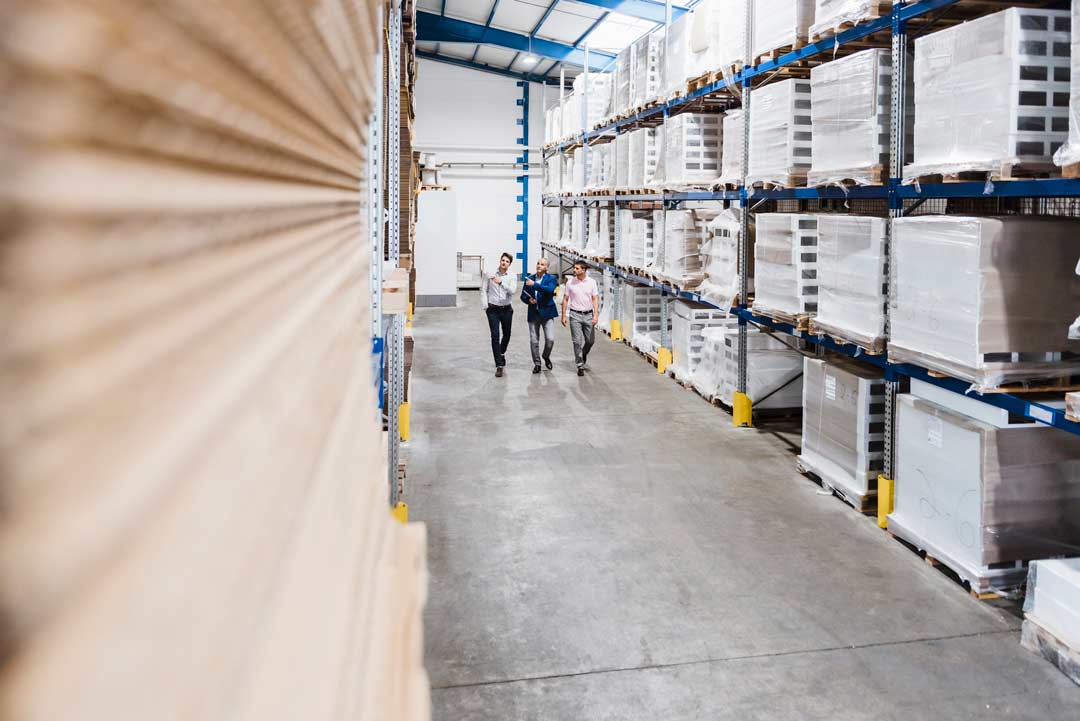
The most effective way to manage FF&E delivery complexity is to consolidate freight at a staging warehouse near the project site before final delivery. Rather than having each vendor ship directly to the job site — where space is limited, security may be uncertain, and the crew isn’t available to receive freight on the vendor’s schedule — inbound FF&E is received, inspected, and held at a warehouse until the site is ready and a coordinated delivery can be made.
Adcom’s Tampa warehouse supports this model for projects in Tampa, the greater Tampa Bay area, and the broader Southeast corridor. Inbound FF&E from multiple vendors consolidates at Adcom’s facility, where it’s received, checked against the project manifest, and staged for coordinated delivery to the job site at the right time. This eliminates the chaos of uncoordinated vendor shipments arriving at a live construction or renovation site.
Inspection and Damage Documentation
One of the most valuable functions of a staging warehouse in FF&E logistics is the opportunity to inspect freight before it reaches the job site. Damage discovered at the warehouse can be documented, photographed, and addressed while there’s still time to reorder or repair before the installation window. Damage discovered at the job site — especially if it’s discovered during or after installation — is almost always more expensive to resolve.
A systematic receiving process that checks each piece against the project’s FF&E schedule, documents condition on arrival, and flags discrepancies immediately gives project managers visibility they simply don’t have when freight goes directly to site. For high-value projects where a single damaged piece can delay an opening, this inspection step is worth the additional handling cost many times over.
Cross-Docking for FF&E Projects With Tight Windows
Not all FF&E projects have the luxury of extended staging time. For renovations with short windows, or projects where the job site is available for a limited period, Adcom’s Tampa cross-docking services can consolidate multiple inbound shipments and redirect them to the job site in a single coordinated delivery without extended storage. This is particularly effective when freight from multiple vendors arrives within a short window and needs to be delivered together rather than in a series of uncoordinated drops.
The combination of warehousing for projects with longer lead times and cross-docking for projects with tight installation windows gives FF&E logistics the flexibility to match each project’s actual constraints rather than forcing every project into the same delivery model.
Where FL Cross-Dock Transfer Services Fit an FF&E Timeline
When a project window is genuinely tight, the transfer speed itself becomes the deciding factor. Adcom’s FL cross-dock transfer services page covers the same-day facility capacity referenced above.
Planning Your FF&E Logistics Timeline
The most common FF&E logistics mistake is treating freight coordination as a late-stage task. By the time the project schedule is locked and the installation team is booked, there’s no room to absorb the delays and complications that inevitably arise when freight isn’t properly staged. Building logistics coordination into the project timeline from the beginning — including a staging warehouse relationship, a receiving process, and a coordinated delivery schedule — is what separates smooth project openings from chaotic ones.
If you’re thinking about how a staging warehouse fits into your broader distribution strategy, our earlier piece on setting up regional distribution without a warehouse lease covers the flexible 3PL model that underpins this approach. To discuss FF&E staging and delivery for your next project, call Adcom at 813-887-3747 or request a quote.
Manufacturing and industrial projects with their own delivery deadlines can lean on the same staging approach — see manufacturing and industrial equipment logistics for how that freight gets handled, and for freight headed into a cross-dock rather than a staging warehouse, preparing freight for cross-docking covers what needs to happen before it arrives.