
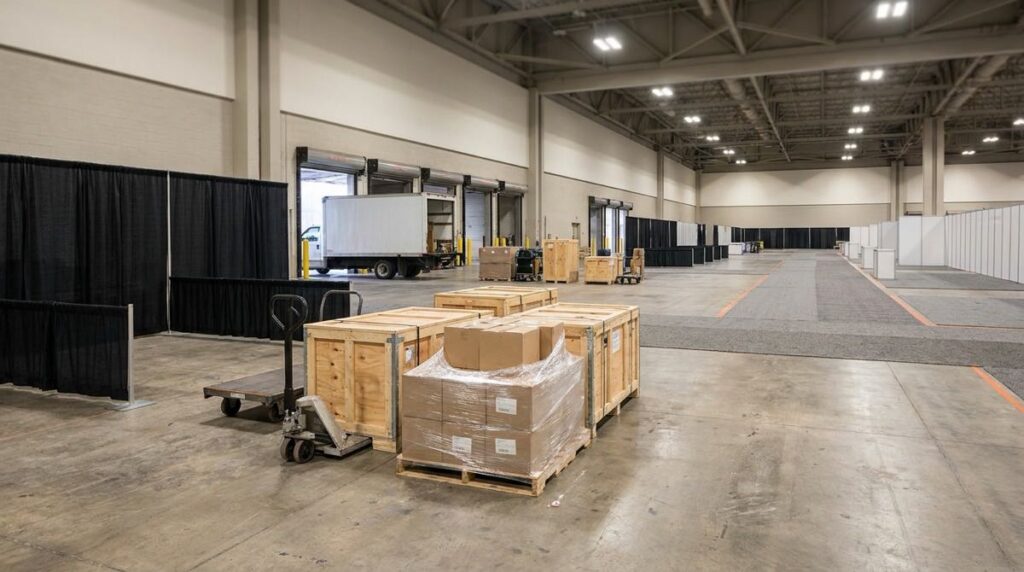
Exhibitors often budget for the truck and then meet a second bill. The second bill is show drayage, also called material handling: the show contractor’s charge for moving freight from the receiving point to the booth and back again at teardown. Freight delivery and show drayage are separate services with separate invoices, and the exhibitor kit explains the second one. EXHIBITOR Online’s logistics section collects trade show logistics articles for exhibitors who want more background.
This guide separates the two, shows where each fee comes from, and covers how to keep the total predictable. For the broader outbound and return plan, see our Tradeshow Logistics 101 guide.
What Does Show Drayage Mean?
At most shows, the organizer appoints an official contractor to move freight inside the show. In trade show language that move is called drayage, which is easy to confuse with the port term. Port drayage is a short-haul truck move between a terminal and the next stop in the supply chain, and our drayage explainer covers that version. Show drayage is the handling from where the show receives your freight to your booth.
How Is Show Drayage Different From Freight Delivery?
The two services meet at the dock and are billed by different parties. The table shows where each one starts and stops.
| Service | What it covers | Who bills it |
|---|---|---|
| Freight delivery | Pickup and transport to the venue dock or advance warehouse | The freight carrier |
| Show drayage (material handling) | Moving freight from the receiving point to the booth, and back at teardown | The show’s official contractor |
| Port drayage | A short truck move between a port terminal and the next stop | The drayage carrier |
Freight delivery ends at the dock the show designates. Our trade show and event freight service works the same way, so confirm who takes the freight from the dock and when before the truck leaves.
What Else Can Appear on a Material Handling Bill?
Exhibitor kits commonly list charges beyond the base handling rate. The items and rules vary by show, so read the kit for each event. Common line items include:
- Minimum charges per shipment
- Different rates for crated and uncrated freight
- Added charges for oversize or heavy pieces
- Charges for freight that arrives outside the target delivery window
- Storage and return handling for empty crates
- Outbound labeling and paperwork
Carrier-side extras, such as liftgate fees, are a separate category. Our guide on freight accessorial charges explains what triggers them and how to avoid them.
How Do Weight and Packaging Affect the Handling Bill?
Many show contractors price handling by weight, often with a minimum, so total weight and piece count matter as much as the freight rate. Consolidating small cartons onto a few skids and crates, and avoiding loose pieces, keeps the count down. A less than truckload shipment keeps the pieces together on one bill of lading, which makes the receiving count easier to match.
Keeping the Two Bills Predictable
Ask three questions before booking: what time the carrier has to reach the dock, who signs for the freight, and what rate and minimum the kit lists. Exhibitors with several shows a year can also stage freight ahead of each one. Our guide to cross-dock consolidation for multi-city events covers how that works across a show calendar.
If your exhibitor kit lists material handling rates and your freight quote stops at the dock, call 813-887-3747 and a logistics specialist will line up the delivery so both bills are accounted for.